

When summer fades and cooler weather sets in, our skin needs a seasonal reset. Sun exposure thickens the skin’s outer layer as a form of protection, and while sunscreen is essential, it adds another layer on top. The result is a buildup of keratinized skin that blocks products from penetrating effectively.
After months of sun exposure and outdoor activity, the skin’s outer layers can become thickened with buildup, making treatments like peels less effective. A transition facial at the end of summer is recommended to deeply exfoliate, remove congestion, and restore the skin’s ability to absorb serums and moisturizers. This helps maximize the benefits of your skincare routine moving into the cooler months.
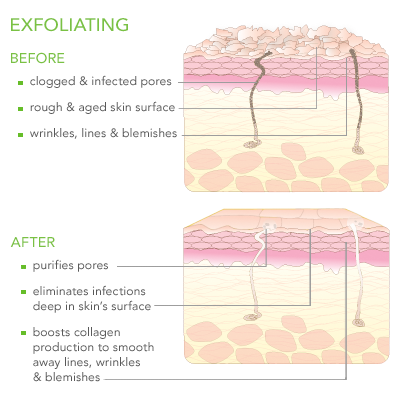
This type of facial often includes both manual and rapid exfoliation. Manual exfoliation uses fine, textured scrubs to gently buff away surface debris and smooth the skin. Rapid exfoliation goes deeper, relying on chemical or enzymatic ingredients to dissolve dead skin cells and clear congestion below the surface. Together, these methods help renew skin texture and improve absorption of active ingredients.
At home, clients can continue this process with exfoliants like the V-Peel or V-Scrub (Manual), which blend physical and enzymatic exfoliation for a balanced approach. For mature or dry skin types, the Night Peel offers a rapid yet gentle option to continue renewing the skin between professional treatments.
Exfoliation Options by Line
Phytomer: Resurfacing Peel(Manual) and Emergence (gentle enough for rosacea and sensitive skin).
Yonka: Guarana Scrub(Manual), Alpha-Peel, and Glyconight.
SkinCeuticals: Micro Scrub(Manual), Blemish Age, Retexturizing Activator, and Retinol.
Priori: Scrub and body lotion for full-body exfoliation.
Some clients hesitate at the word peel, so we often call these products “rapid exfoliants.” The best results come from combining treatments, for example pairing a facial with microdermabrasion plus an AHA exfoliant. This not only helps lighten pigmentation but also maximizes product penetration and protects your investment in high-quality skincare. Ideally, exfoliation should be done monthly, but every three months at minimum.
Why Hydration Becomes Essential in Fall
Once the air cools and indoor heating kicks in, many clients notice sudden dryness. This happens because the hydrolipidic film, which protects the skin’s acid mantle and microbiome, becomes compromised. Without this natural barrier, moisture escapes from the dermis, leading to dehydration and irritation. That’s where hydration boosters come in.

Hydration Options by Line
Phytomer: Hydra C Serum, Flash Gel.
Yonka: Hydra Booster, Hydra Plus, Hydra Mask (overnight option).
SkinCeuticals: B5 Gel, B5 Mask, HA Intensifier.
These boosters can be layered into an existing routine or used in place of switching to a heavier cream. For example, clients moving from humid climates like Texas or Florida may not normally deal with dryness, but in drier regions they’ll feel it quickly. In those cases, adding a booster to their moisturizer or applying a hydrating mask overnight is often more effective than switching products entirely.
Hydration needs also shift with age and intrinsic factors such as hormones. Adjusting to these changes helps maintain homeostasis, allowing skin to repair and replenish itself naturally.
Skincare Is Part of the Bigger Picture
While exfoliation and hydration are foundational, they are only part of a healthy skin strategy. Diet, sleep, stress levels, and lifestyle choices all influence the skin’s ability to repair itself. Topical products support those processes, but they cannot replace them.
Think of seasonal skincare like tending a garden. Exfoliation clears away the buildup, making room for fresh growth, while hydration restores balance and protects the barrier as the weather changes. Together, these steps amplify the results of any routine and protect the investment you have made in professional skincare.


Comments (0)
There are no comments for this article. Be the first one to leave a message!